 Health & Safety Policy — Skip Hire Lambeth
Skip Hire Lambeth is committed to providing a safe working environment for employees, contractors, visitors and members of the public in the course of delivering our rubbish removal and waste management services. This policy sets out the principles, responsibilities and controls that govern safe operations for skip hire, waste collection and site handling. It is designed to be clear, practical and proportionate to the risks associated with a skip hire service area while aligning with general statutory expectations.
 This policy applies to all operations under the company’s control and to all personnel engaged in skip delivery, collection, loading and transfer of materials. The management endorses a preventative approach: assessing hazards, applying suitable controls, providing training and ensuring competence. The objective is to reduce incidents, prevent injuries and maintain environmental best practice during every stage of rubbish collection and skip hire service delivery.
Responsibilities and Duties
 Senior management are responsible for implementing and reviewing this health and safety statement and for ensuring that adequate resources are provided. Supervisors and line managers must ensure safe systems of work are followed for each skip hire task. Employees and operatives have a duty to take reasonable care for their own health and safety and to cooperate with safety procedures. Subcontractors must comply with site rules and report hazards or unsafe acts without delay.
Key responsibilities include:
- Risk assessment: Conducting and recording risk assessments for deliveries, collections and on-site loading operations.
- Training and competence: Ensuring all staff receive appropriate instruction, training and supervision for waste handling and vehicle operation.
- Equipment and maintenance: Maintaining vehicles, lifting gear, chutes and loading equipment in a safe, roadworthy condition.
Risk Management and Safe Systems of Work
 A systematic approach to risk control underpins our skip hire and rubbish collection activities. Risk assessments will consider traffic management, manual handling, hazardous wastes, interaction with public spaces and site-specific conditions. Controls include the use of personal protective equipment (PPE), exclusion zones, lighting, traffic cones and signage where necessary.
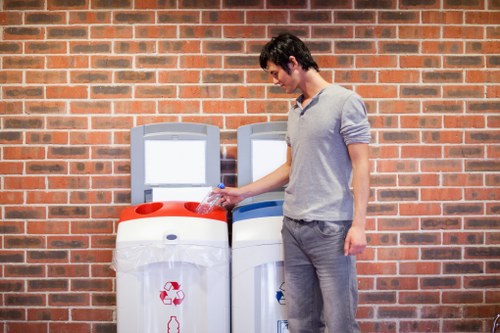 Manual handling risks are mitigated through mechanical aids, safe lifting techniques and appropriate team lifting where required. Drivers and operatives are instructed to check vehicle load security, follow highway safety rules and apply safe stowage practices during transfer and transport of waste. The company prohibits overloading and requires segregation of prohibited or hazardous materials prior to collection.
Incident Reporting and Investigation
All incidents, near misses and dangerous occurrences must be reported promptly. Investigations aim to identify root causes and implement corrective actions to prevent recurrence. The process includes immediate containment, evidence preservation and clear reporting records. Lessons learned are communicated to staff and integrated into training and procedures.
Emergency preparedness is critical: operatives are instructed on first-aid provision, reporting channels and emergency access for emergency services. Spill kits and containment materials are available for accidental releases, and a clear procedure exists for dealing with hazardous wastes encountered during skips or collections.
Training, Competence and Communication
All staff undertaking skip hire operations will receive induction training covering operational safety, manual handling, vehicle safety and the correct segregation of waste. Refresher training is provided periodically and whenever procedures change. Toolbox talks and briefings are used to reinforce key safety messages at the start of shifts or before complex operations.
Communication of health and safety performance is delivered via toolbox talks, written briefings and supervisor-led reviews. Staff are encouraged to raise concerns and propose improvements; safety suggestions are reviewed and, where appropriate, adopted into practice.
Contractors, Subcontractors and Compliance
All third parties engaged in skip hire tasks must demonstrate compliance with this policy and with applicable regulations. Pre-engagement checks include verification of licenses, insurance, training records and safety performance. Subcontractors must cooperate with site safety rules and co-ordinate with Skip Hire Lambeth personnel to manage shared risks during operations.
Regular audits and spot checks evaluate adherence to safe systems of work, vehicle maintenance schedules and operational standards for rubbish collection and skip placement. Non-conformance triggers corrective action and follow-up to secure remedial measures.
Performance Monitoring and Continuous Improvement
Health and safety performance is monitored through incident metrics, audit results and workforce feedback. The company adopts a continuous improvement approach: investigating trends, updating risk assessments and revising controls to respond to new risks or regulatory changes. Reviews are scheduled annually or sooner following significant incidents or operational changes.
Policy review is the responsibility of senior management who will ensure this document remains current, accessible and effective. Staff are informed of changes and provided with relevant training to embed updated procedures into everyday practice across the skip hire and rubbish removal operations.
Commitment
Skip Hire Lambeth is committed to maintaining high standards of health and safety across all services, including skip hire, waste transfer and rubbish collection activities. This policy provides the framework for safe decision-making, compliance and protection of people and the environment. All personnel are required to support and implement the policy to achieve a safe, efficient and responsible service.
Signed on behalf of management: the policy will be published internally and communicated to relevant stakeholders. It remains a live document and will be amended as necessary to reflect operational, legal or technical developments in waste and skip hire services.